
Security Awareness Training: Building a Culture of Cyber Resilience

Shelvira
Mar 30, 2026

Table of contents
Overview
What is Security Awareness Training?
Why Training is Mission-Critical?
The Impact of a Lack of Security Awareness
Best Practice to Implement Effective Security Awareness Training
Conclusion
Tags:
Overview
Employees are often the weakest link in an organization's security system because they may forget important information and are vulnerable to fraud. Security awareness training helps employees understand the risks, threats, and vulnerabilities that can be targeted. This training teaches them how to protect the organization's network and data, especially for organizations operating in the IT sector, where employees who use devices are often the target of cyber attacks.
Effective training encourages employees to participate more actively in security programs and learn how to protect themselves and the organization from cyber threats. In today's digital landscape, where cyber attacks are becoming increasingly sophisticated and frequent, security awareness training is no longer optional, it's a critical component of any organization's cybersecurity strategy.
What is Security Awareness Training?
Security Awareness Training is a strategic educational initiative designed to empower employees to identify, deflect, and report cyber threats. Rather than viewing staff as liabilities, this training fosters a culture of shared responsibility.
Core Curriculum Areas :
Phishing Identification: Spotting deceptive emails and malicious URLs.
Social Engineering: Recognizing psychological manipulation (Pretexting, Baiting).
Credential Hygiene: Mastering strong password policies and Multi-Factor Authentication (MFA).
Data Handling: Understanding safe storage and transmission of sensitive information.
Incident Response: Knowing exactly how and when to report a suspicious event.
The Modern Edge: Modern SAT leverages Attack Simulations. By sending safe, "mock" phishing emails, organizations provide hands-on experience that sticks far better than passive slide presentations.
Why Training is Mission-Critical?
Even the most advanced security technology can be circumvented if people are not trained to recognize threats. Without security awareness training, employees and other users often become easy targets for attacks such as phishing, ransomware, and social engineering, which can harm the entire organization. The purpose and benefits of effective security awareness training extend far beyond simple compliance, create a security-conscious workforce that serves as an organization's first line of defense.
Table 1 The Benefit and Impact of Security Awareness for Organization
| No | Benefit | Impact on The Organization |
|---|---|---|
1 | Cultural Shift | Moves security from a "manual" to a mindset. |
2 | Risk Mitigation | Dramatically reduces the success rate of ransomware and BEC (Business Email Compromise). |
3 | Regulatory Alignment | Meets mandatory requirements for GDPR, ISO 27001, and HIPAA. |
4 | Customer Trust | Demonstrating a commitment to data privacy becomes a competitive advantage. |
5 | High ROI (Return on Investment) | The cost of a seat license is a fraction of the average $4.8M cost of a data breach. |
These benefits compound over time, creating a security-aware organization that naturally resists threats rather than simply reacting to them. When employees understand the "why" behind security policies, they become active participants in protecting the organization rather than passive rule-followers.
The Impact of a Lack of Security Awareness
Understanding the consequences of inadequate security awareness helps organizations appreciate the urgency of implementing comprehensive training programs. The impact extends beyond immediate technical issues to encompass financial, operational, legal, and reputational dimensions that can threaten an organization's survival.
1. Data Breaches
A lack of security awareness can lead to the accidental leakage of sensitive data, whether it be corporate or personal information. Employees may inadvertently send confidential information to the wrong person or fall victim to a phishing attack and unknowingly share their login credentials with cyberattackers. To increase awareness of data breaches, here is a summary of the 2025 data breach statistics and major incidents, synthesized from the latest reports from various sources
Table 2 2025 Global Data Breach Statistics
| No | Metric | Statistic |
|---|---|---|
1 | Top Entry Vector | Stolen Credentials (22%) & Phishing (16%). |
2 | Ransomware Propagation | 44% |
3 | Cloud Intrusion Surge | 136% increase in cloud-based attacks |
4 | Human Element | 60% of breaches involved social engineering or human error. |
5 | Third-Party Risk | 30% of breaches involved a third-party vendor. |
6 | Time to Detect | 241 Days (average lifecycle to identify) |
Table 3 Major Data Breaches of 2025
| No | Organization | Date | Scale | Primary Attack Vector |
|---|---|---|---|---|
1 | Ticketmaster (Live Nation) | May 2025 | 560 Million users compromised | Third-party cloud compromise |
2 | Change Healthcare | Feb 2025 | 192.7 Million records exposed | Ransomware/System Intrusion |
3 | Bybit Crypto Exchange | Feb 2025 | $1.5 Billion | Malicious JavaScript |
4 | Jaguar Land Rover | Sept 2025 | $2.5 Billion in total estimated losses | Vulnerability in SAP NetWeaver |
5 | AT&T | March 2025 | 86 Million records exposed | Unauthorized access |
6 | Marks & Spencer | April 2025 | £300 Million in lost profits | Social Engineering |
7 | Yale New Haven Health | March 2025 | Millions of patient records | Shadow data surface exploitation |
2. Operational Disruption
Operational inefficiencies, reduced productivity, and employee downtime are common consequences of security incidents. Organizations may face operational disruptions lasting days or weeks while recovering from a ransomware attack or other security breaches. This impact is becoming increasingly evident in 2025 data, which shows a significant increase in operational disruptions and downtime experienced by organizations due to cyber incidents.
Table 4 2025 Operational Disruption Statistics
| No | Metric | Statistic | Context |
|---|---|---|---|
1 | Dwell Time | 241 Days | The average amount of time a “disruptor” (hacker) spends inside a system before being detected. |
2 | Outage Frequency | 84% Increase | Most companies reported a significant increase in network outages compared to 2024. |
3 | The "Breakout" Record | 27 Second | The fastest recorded time for an attacker to switch from the initial stage of an attack to fully controlling the system. |
4 | Primary Root Cause | 60% (Human Error) | Most disruptions are not the result of “hacking”; rather, they are caused by internal errors or improperly managed updates. |
5 | Supply Chain Impact | 33% Increase in Alert | Geopolitical disruptions and those related to service providers are expanding faster than direct attacks. |
Table 5 Major "Blackout" Event in 2025
| No | Incident | Duration | Primary Cause | Impact |
|---|---|---|---|---|
1 | AWS | 15+ Hours | DynamoDB Error | A massive outage disrupted services for Snapchat, Netflix, and thousands of other companies. |
2 | PlayStation Network | 24 Hours | Network-wide failure | Millions of gamers were blocked from accessing the service; this was the second-largest outage reported this year. |
3 | Microsoft Azure | 4 Hours | Configuration change | Global outages affecting “Entra” and “Defender,” proving that even security tools can be a source of service disruptions. |
4 | Ingram Micro | 6 Days | Ransomware | Global distribution has been suspended; the ordering and billing systems are completely inaccessible. |
5 | Commonwealth Bank | 2 Hours | Infrastructure failure | Complete disruption: mobile apps, websites, and physical ATMs all went down at the same time. |
3. Financial Loss
Security incidents can have significant financial consequences for organizations. The impacts can vary widely, ranging from the costs of system repairs following a ransomware attack to fines resulting from privacy violations, which often run into the millions of dollars. This increasing financial impact is clearly reflected in the latest global data, which shows a significant spike in total losses caused by cyber incidents by 2025.
Table 6 Financial Impact of Security Awareness Failures
| No | Threat Category | Frequency | Financial Impact |
|---|---|---|---|
1 | Human Error | 60% | $160 per record compromised |
2 | Phishing | 16% | $4.88 Million Global average per breach |
3 | Business Email Compromise (BEC) | 25% | $6.3 Billion Total global losses |
4 | Social Engineering | 17% | $4.77 Million Global average per breach |
5 | Ransomware | 44% | $5.08 Million Average cost when extortion occurs |
4. Legal Consequences
Violations of data protection laws and regulations can result in legal consequences such as fines and lawsuits. A lack of security awareness can lead employees or organizations to inadvertent violations of laws and regulations, thereby incurring legal liability. This risk is confirmed by data from 2025, which shows a significant increase in the number of legal actions, regulatory enforcement actions, and compliance-related costs resulting from security incidents.
Table 7 Legal and Regulatory Impact of Awareness Failure
| No | Metric | Statistic | Trigger |
|---|---|---|---|
1 | Regulatory Fine Frequency | 32% of Organizations | Paid a fine post-breach (average. exceeding $100,000). |
2 | GDPR Enforcement Total | €3.1 Billion (H1 2025) | Failure to implement appropriate organizational measures. |
3 | Class Action Settlement | Avg.$12.5 Million | A claim for damages based on negligence due to a “lack of an adequate safety culture.” |
4 | Breach Notification Penalty | +$500,000 in costs | Additional costs incurred for missing accelerated 72-hour deadlines. |
5 | Shadow AI Cost Multiplier | +$670,000 per breach | Use of unsanctioned AI tools by untrained employees. |
6 | B2B Contractual Claims4 | 5% of Business Breaches | A lawsuit for “breach of contract” due to an employee’s error. |
Best Practice to Implement Effective Security Awareness Training
To ensure effective security awareness training, you can implement the following best practices :
1. Understand Your Starting Point
Before implementing any security awareness training program, it's essential to understand your current position. Start by evaluating your employees' existing knowledge and understanding of security to pinpoint any shortcomings and opportunities for enhancement. In addition, assess the strengths of your current security awareness program and the overall security culture within your organization.
Tools like the SANS Security Awareness Maturity Model, created through the collaborative work of over 200 security awareness officers, can help you evaluate the maturity level of your program and pinpoint areas where you can take action to advance to the next stage.
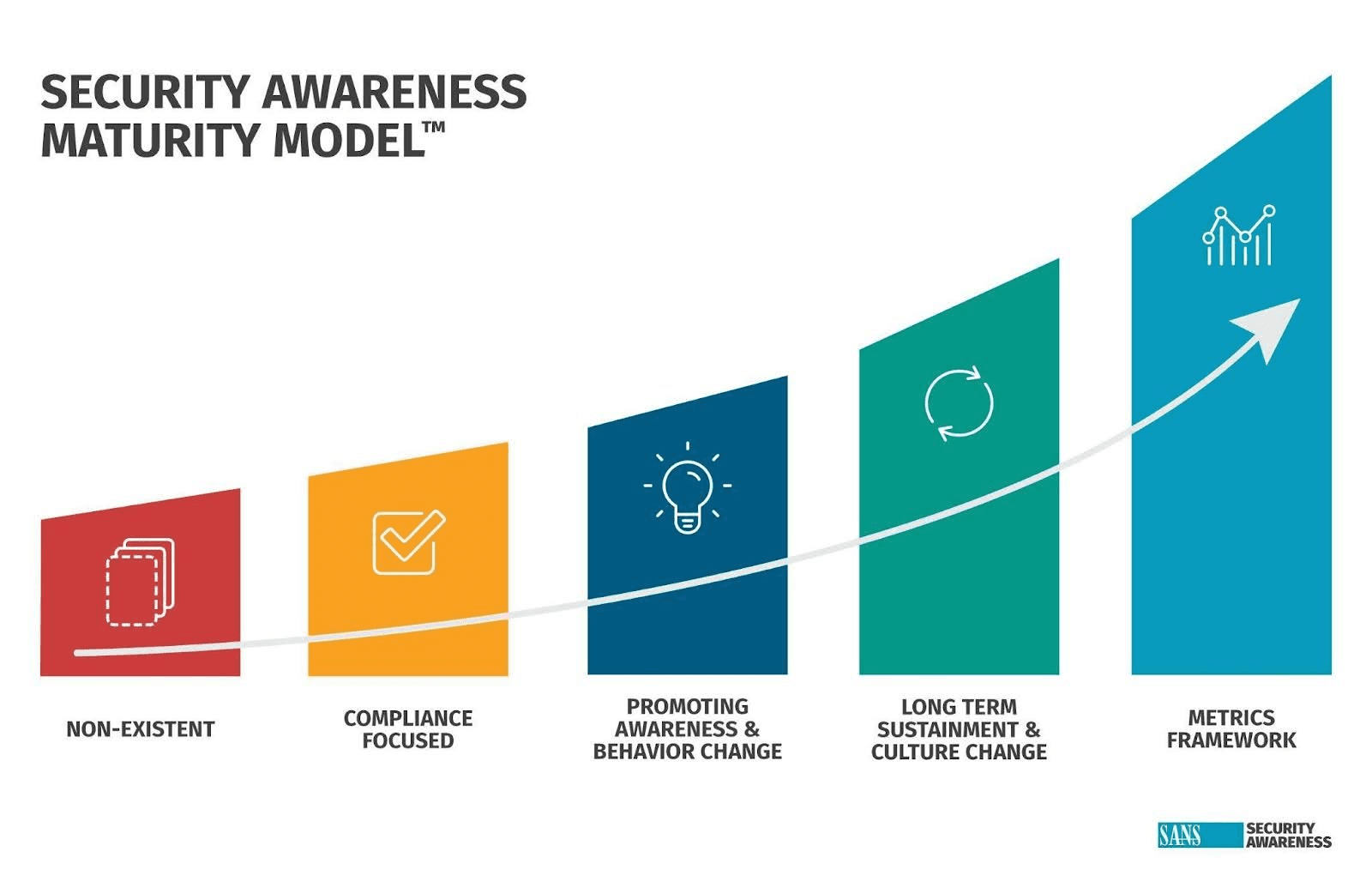
Figure 1 SANS Security Awareness Maturity Model
Understanding your starting point enables you to create targeted, relevant training that addresses your organization's specific vulnerabilities. A one-size-fits-all approach rarely works-effective programs are tailored to your industry, regulatory environment, and organizational culture.
2. Engaged from the Top-Down
Security awareness must be required for all individuals, regardless of their position, from top-level executives down to entry-level staff. This is particularly relevant for senior-level management because they are high-value targets who have access to sensitive information that is highly attractive to attackers.
Executive Leadership
Senior leaders set the tone for security culture and must actively support and participate in training initiatives
Management Level
Managers reinforce security practices and serve as security champions within their teams and departments
All Employee
Every team member must receive role-appropriate training and understand their responsibility in security
Leadership Involvement
For a security awareness and training program to be most effective, it is essential to have support and involvement from top-level management and active participation from all employees. Leadership must visibly support the program through their actions, not just words.
Integrated Approach
An integrated approach is the most effective method for developing an organizational security culture where sound decision-making and proven cybersecurity practices are clear and achievable goals for all end-users at every level.
3. Set Goals & Stay Current
Collaborate with Stakeholders
Identify main issues and potential risks in specific parts of the organization, creating a comprehensive risk picture
Set Achievable Goals
Create a task schedule to resolve issues step by step over a set period of time with measurable outcomes
Create Relevant Content
Develop content specific to your organization's industry and risks, focusing on real scenarios employees encounter
Maintain Continous Efforts
Keep cybersecurity best practices a priority through ongoing activities integrated into daily workflows
Stay connected and up-to-date with evolving threats and adjust your approach if initial methods don't produce good results. Ongoing efforts will keep you in a state of consistent improvement. Users should clearly understand what is happening, why it is necessary, and their role in maintaining security.
4. Applying Gamification
Conventional training methods can feel monotonous. Integrating gamification into your awareness program can make security training more memorable and encourage active participation. True gamification is a reward system that positively reinforces the learning process through awards, points, or recognition aligned with company culture.
5. Integrating Technology
People and technology work side-by-side to identify and respond to threats. Security awareness training platforms can elevate your educational efforts and assess knowledge levels with customizable interactive software modules delivered through microlearning lessons, interactive content, and episodic formats.
6. Avoid Punishment
Human error is inevitable. Take a "more incentives, less punishment" approach that empowers employees to share information and build a culture of collaboration. View security incidents as learning opportunities rather than reasons for negative consequences to encourage reporting.
7. Measuring Effectiveness
Set benchmarks to assess program effectiveness and show return on investment. Combine compliance benchmarks with behavioral metrics like email opens, phishing campaign click rates, reporting rates, and response times. Use analytics to identify improvement areas.
Conclusion

Security awareness training is no longer an optional initiative but rather a pillar of cybersecurity. While technology is important in protecting systems and data, human behavior remains one of the biggest risk factors. By providing employees with the knowledge, skills, and mindset to recognize and respond to cyber threats, organizations can transform their workforce from a potential vulnerability into a strong line of defense.
A lack of security awareness can lead to serious consequences, including data breaches, operational disruptions, financial losses, and legal issues. Therefore, implementing an effective, sustainable, and inclusive security awareness program supported by leadership, reinforced through real-world simulations, gamification, and appropriate technology helps build a strong security culture, reduce risk, ensure regulatory compliance, and strengthen customer trust.
Ultimately, investing in security awareness training is an investment in the long-term resilience and sustainability of the organization. The statistics are clear: 68% of all data breaches stem from human error. With proper training, support, and culture, your employees become your greatest security asset rather than your weakest link.
Reference
“What is Security Awareness” https://keepnetlabs.com/blog/what-is-security-awareness
“Understanding the Importance of Your Security Awareness Training Goals” https://www.empowerelearning.com/blog/why-is-the-goal-of-your-security-awareness-training-so-important/
“What is security awareness: Definition, history and types” https://www.infosecinstitute.com/resources/security-awareness/security-awareness-definition-history-types
“What is security awareness?” https://awaretrain.com/en-en/what-is-security-awareness/
“Security Awareness Training: 6 Important Training Practices” https://aware.eccouncil.org/security-awareness-training-6-important-training-practices.html
“Best Practices for Security Awareness Training Success” https://convergetp.com/2021/10/13/best-practices-for-security-awareness-training-success/
"Security Awareness Training Statistics 2025 [100+ Studies]" https://www.brside.com/blog/security-awareness-training-statistics-2025-100-studies
"2025 Data Breach Investigations Report" https://www.verizon.com/business/resources/reports/dbir/
"IBM Cost of Data Breach" https://www.ibm.com/reports/data-breach
"Top 10 cybersecurity breaches of 2025: Lessons for compliance" https://www.int-comp.org/insight/top-10-cybersecurity-breaches-of-2025-lessons-for-compliance/
"Survey Reveals a Focus on AI Adoption, Skills and Risks, as well as the Rapidly Evolving Legal and Regulatory Environment" https://www.gartner.com/en/newsroom/press-releases/2025-10-01-gartner-survey-shows-ai-and-contract-analytics-ar-urgent-priorities-for-general-counsel
Continue Reading

Alert Fatigue: The Silent Threat That Turns Critical Warnings into Background Noise
In the world of cybersecurity, alerts are meant to be the first line of defense against potential threats. However, the sheer volume of alerts that security teams receive can lead to a phenomenon known as alert fatigue, where analysts become desensitized to warnings and may miss genuine threats.
Read More

Security Awareness Training: Building a Culture of Cyber Resilience
Employees are often the weakest link in an organization's security system because they may forget important information and are vulnerable to fraud. Security awareness training helps employees understand the risks, threats, and vulnerabilities that can be targeted. This training teaches them how to protect the organization's network and data, especially for organizations operating in the IT sector, where employees who use devices are often the target of cyber attacks.
Read More

State of the Art: Architecture, Training, and Engineering of Large Language Models
The foundational pillar of modern Large Language Models (LLMs) rests upon the Transformer architecture, a computational paradigm that fundamentally altered natural language processing through the Self-Attention mechanism. Unlike recurrent networks that process data sequentially, Self-Attention allows every token within an input sequence to interact with all other tokens simultaneously. This generates a highly contextualized representation space capable of capturing long-range dependencies without rigid structural boundaries.
Read More

The Invisible Guard: How DMZs Protect the Modern Enterprise
Digitalization in the healthcare sector has been growing rapidly alongside the increasing adoption of information technology in healthcare services. The implementation of electronic medical records, online doctor consultation applications, and hospital queue management systems has significantly transformed healthcare delivery, making services more efficient and accessible for patients. However, this digital transformation also introduces new risks, particularly the rising threat to information security. This situation poses a serious challenge for the healthcare sector in the digital era, requiring organizations to establish, implement, and continuously improve information security management systems in a sustainable manner (Ansar, 2024).
Read More

ISO/IEC 27001: A Strategic Investment in Healthcare Security in the Digital Era
Digitalization in the healthcare sector has been growing rapidly alongside the increasing adoption of information technology in healthcare services. The implementation of electronic medical records, online doctor consultation applications, and hospital queue management systems has significantly transformed healthcare delivery, making services more efficient and accessible for patients. However, this digital transformation also introduces new risks, particularly the rising threat to information security. This situation poses a serious challenge for the healthcare sector in the digital era, requiring organizations to establish, implement, and continuously improve information security management systems in a sustainable manner (Ansar, 2024).
Read More

Large Language Model Vulnerabilities
With the integration of Large Language Models (LLMs) being commonplace in the workflows of enterprises across the globe, it is imperative that their vulnerabilities be known. Although developers use “System Prompts” to set behavioral guidelines for these models to safeguard confidential information, these directions are not foolproof.
Read More


© 2025 Tjakrabirawa Teknologi Indonesia. All Rights Reserved.